
The rules that once defined good leadership—efficiency, control, short-term performance—no longer tell the whole story. The challenges leaders now face are systemic, interconnected, and too large for any single organization to solve alone.
At the center of this shift is a fundamental question: how do you create lasting impact?
That’s the question driving the work at Impact by LEAD Think Tank, and the central argument of Unleash Impact.
As Johan Rockström, Director of the Potsdam Institute for Climate Impact Research, put it during his address to the UN General Assembly: “Failure is not inevitable. It is a choice.” The same logic applies to leadership.
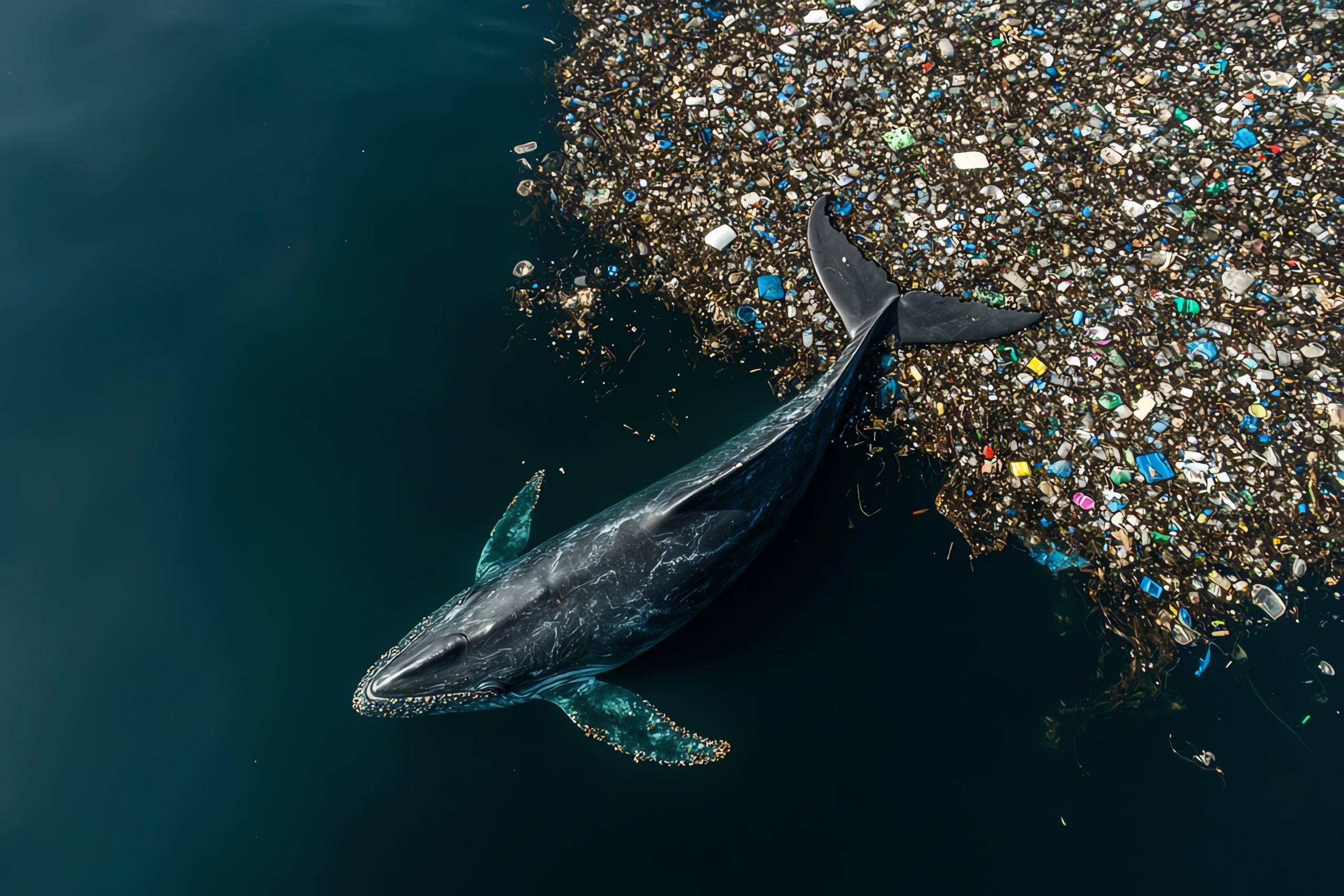
The Great Pacific Garbage Patch: A Symbol of Systemic Failure
Spanning 1.6 million square kilometers and containing an estimated 100,000 tonnes of plastic, the Great Pacific Garbage Patch is one of the most vivid illustrations of what happens when systems lack shared accountability.
No single country owns it. No single industry created it. No single policy can fix it. It is, in the most literal sense, a problem without an obvious leader, which is precisely why it went unaddressed for so long.
The GPGP doesn’t just represent an environmental crisis. It represents the kind of complex, cross-boundary challenge that exposes the limits of conventional leadership thinking. When responsibility is diffuse, and the costs are invisible until they become catastrophic, traditional top-down approaches stall.
What it requires instead is a different kind of leader—one who builds ecosystems of action rather than chains of command.
From Crisis to Movement: What Collective Action Actually Looks Like
In 2011, a 16-year-old named Boyan Slat was scuba diving in Greece when he noticed something that stopped him cold: more plastic than fish. The question that followed—“Why don’t we just clean it up?”—would eventually become The Ocean Cleanup, one of the most ambitious environmental engineering projects ever attempted.
Slat didn’t have institutional backing, a large team, or a proven model. He had a high school science project, a TEDx stage in Delft, and a willingness to pursue an idea that experts called impossible. After his 2012 talk went viral in March 2013, The Ocean Cleanup raised its first $90,000 through crowdfunding—and a global movement took shape.
What made the difference wasn’t just Slat’s vision. It was his ability to create value (a genuine solution to a genuine problem), share it openly (a TEDx talk, crowdfunding, transparent research), and amplify it through the collective energy of thousands of people who wanted to help.
That’s the 3Vs Framework in action. A framework we use to structure our analysis through the Unleash Impact book.
- Value Creation means identifying a problem worth solving and developing a real, meaningful response to it.
- Value Sharing means distributing that value broadly—across communities, collaborators, and stakeholders—rather than hoarding it.
- Value Amplification means building the conditions for impact to grow beyond what any individual effort could achieve alone.
Together, these three dimensions form the architecture of lasting impact. They’re not sequential steps. They’re a continuous cycle that reinforces itself—and they sit at the heart of the Impact by LEAD Think Tank’s approach to leadership development and the core ideas explored in Unleash Impact.
Impact Is a Practice, Not a Position
Uncertainty isn’t going away. If anything, the complexity leaders face is increasing—across climate, technology, geopolitics, and society. The leaders who will matter most in this environment are those who stop waiting for clarity before acting, and start building the systems, relationships, and shared value that make progress possible regardless.
Rockström’s words bear repeating: failure is a choice. So is impact.